Introduction
Japan is one of those rare destinations where every season offers something extraordinary. Spring brings iconic cherry blossoms, summer brings lively festivals, autumn paints the temples in fiery reds and golds, and winter delivers world-class powder snow. The best time to visit depends entirely on what you want to experience.
Spring (March to May) — Sakura Season
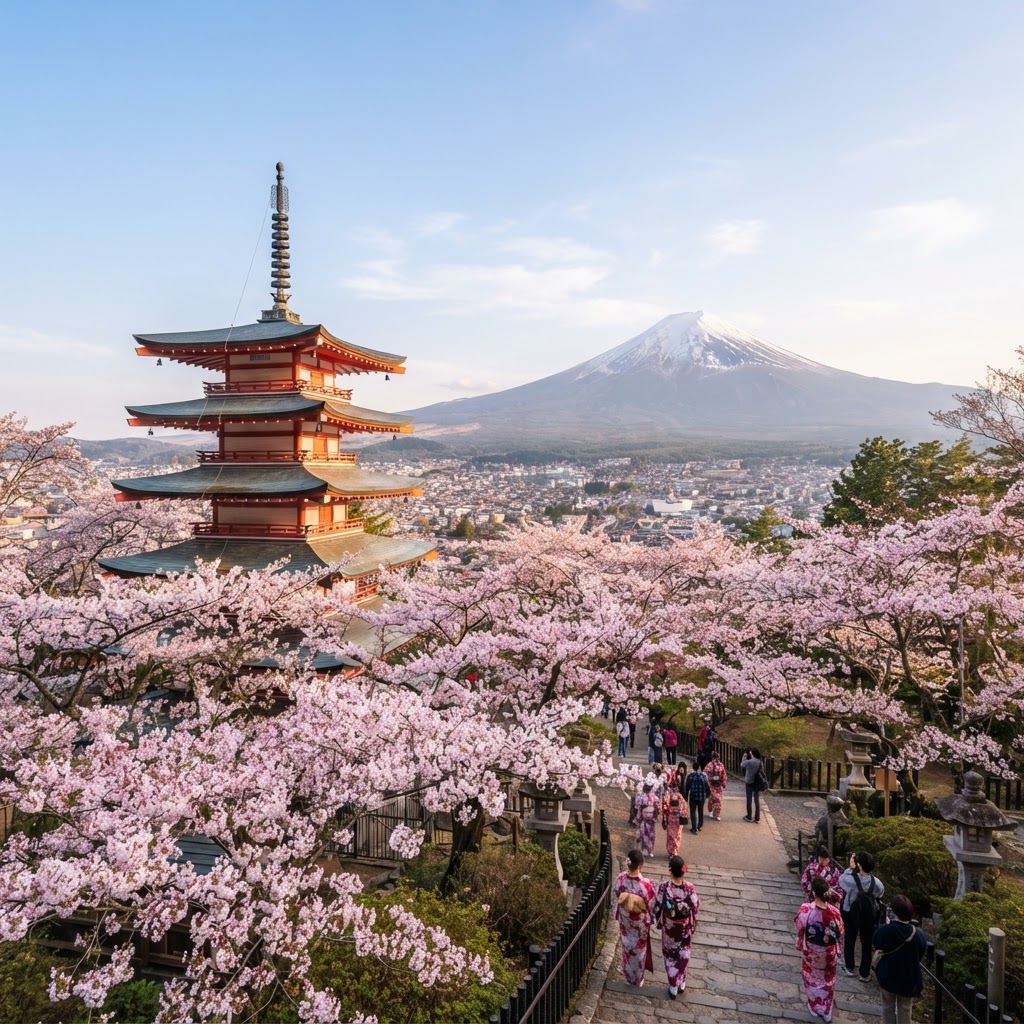
Spring is Japan's most famous season. Cherry blossoms (sakura) typically bloom from late March to early April in Tokyo and Kyoto, drawing visitors from around the world. The weather is mild (10°C–20°C), making it ideal for sightseeing.
What to expect:
- Cherry blossoms in Tokyo, Kyoto, Osaka, and Hakone
- Mild, pleasant weather
- Peak tourist season — book hotels and flights months in advance
- Highest prices of the year
What to pack: Light layers, a spring jacket, and comfortable walking shoes.
Summer (June to August) — Festivals and Fireworks
Summer in Japan is hot and humid, especially in July and August when temperatures can exceed 35°C. But it's also when the country comes alive with matsuri (festivals), fireworks displays, and mountain hiking season.
What to expect:
- Hot, humid weather (25°C–35°C)
- Rainy season (tsuyu) in June to early July
- Major festivals like Gion Matsuri in Kyoto and Sumidagawa Fireworks in Tokyo
- Mount Fuji climbing season (July to early September)
What to pack: Breathable clothing, umbrella, sunscreen, and a handheld fan.
Autumn (September to November) — Koyo Season
Autumn is considered by many to be the best time to visit Japan. The weather is cool and comfortable, and the autumn leaves (koyo) are just as stunning as the cherry blossoms — without the same level of crowds.
What to expect:
- Brilliant red and gold foliage in Kyoto, Nikko, and the Japanese Alps
- Cool, crisp weather (10°C–22°C)
- Fewer crowds than spring, but still busy at popular spots
- Harvest season — great for food lovers
What to pack: Light layers, a medium jacket, and comfortable shoes for temple-hopping.
Winter (December to February) — Snow and Onsens
Winter in Japan is cold, especially in Hokkaido and the Japanese Alps, where world-class ski resorts attract winter sports enthusiasts. It's also the season for hot springs (onsen), winter illuminations, and the famous snow monkeys of Jigokudani.
What to expect:
- Cold weather (0°C–10°C in Tokyo, well below freezing in Hokkaido)
- World-class skiing and snowboarding in Niseko and Hakuba
- Beautiful winter illuminations in Tokyo, Osaka, and Kobe
- Fewer tourists (except during New Year holidays)
What to pack: Heavy winter coat, thermal layers, waterproof boots, gloves, and a hat.
So, When Should You Go?
For cherry blossoms: Late March to early April (Tokyo/Kyoto).
For autumn foliage: Mid-November to early December.
For skiing: January to February.
For festivals: July to August.
For the best balance: Late October to November, or late April to May (after peak sakura).
Practical Tips for Filipino Travelers
- Visa: Filipino passport holders need a tourist visa. Single-entry and multiple-entry visas are available.
- JR Pass: If you plan to travel between cities, the Japan Rail Pass can save you money.
- Currency: The Japanese Yen (JPY). Cash is still king in Japan — carry enough.
- Connectivity: Pocket Wi-Fi or a local SIM is essential. Book before you fly.
Japan rewards repeat visits — each season reveals a different side of this fascinating country. Pick your season, plan ahead, and prepare to be amazed.